Planners & Trackers · Jul 2, 2026 · 4 min read
Fantasy Football Draft Kit Spreadsheet: What to Track Before Draft Night
A checklist for building or choosing a fantasy football draft spreadsheet: draft board, auction budget, roster depth, waiver wire, lineup, and standings tracking before draft night.
Start with the draft-night job, not the prettiest board
Short answer: a fantasy football draft spreadsheet (or a printable draft worksheet) needs a draft board with round, pick, team, player and position. Auction leagues add budget columns, and waiver, lineup and standings tabs keep it useful all season.
Fantasy football draft tools often include cheat sheets, auction value calculators, downloadable player tiers, draft-board spreadsheets, and paid templates. That makes the decision less about finding any spreadsheet and more about choosing, or building, the one that matches how your league actually drafts.
Before you build or buy anything, write down the live job the file needs to handle: a snake draft board, an auction budget, keeper values, roster depth, weekly lineup notes, waiver wire planning, or a commissioner-friendly record of what happened on draft night.
What a useful draft kit spreadsheet should include
A strong fantasy football draft spreadsheet should reduce live draft chaos and still be useful after the last pick is made.
- Draft board: a clean place to record picks by round, team, position, and player so nobody has to rebuild the draft afterward.
- Auction budget: starting budget, winning bids, remaining dollars, max-bid awareness, and roster slots still open.
- Roster depth chart: a quick view of each team's starters, bench, position gaps, and bye-week pressure.
- Weekly lineup planner: a simple way to carry the draft into start/sit planning once the season begins.
- Waiver and trade notes: a place to track priority claims, adds/drops, trade ideas, and follow-up reminders.
- Standings or playoff picture: a lightweight dashboard for commissioners or managers who want the season context in the same workbook.
Snake draft vs. auction draft: what changes
A snake draft can survive with a straightforward pick board. An auction draft needs budget logic because every roster decision affects the next possible bid.
- For snake drafts, prioritize readable rounds, roster slots, position labels, and a fast way to mark each pick as it happens.
- For auction drafts, prioritize remaining budget, player cost, roster need, and whether each manager can still afford premium positions. The auction budget tracker setup walks through the math.
- For keeper or dynasty-style leagues, check whether the file gives you a clean notes area for keeper costs, protected players, and future reminders.
- For casual home leagues, printable pages can matter as much as formulas because the commissioner may need a paper backup at the table.
Commissioner checklist before draft night
The best spreadsheet still needs a few setup decisions before everyone logs in or arrives.
- Confirm scoring rules, roster positions, bench spots, keeper rules, budget amount, and whether injured reserve or taxi spots need their own notes.
- Load team names and draft order before the first pick so the sheet is not being edited under pressure.
- Decide who will update the draft board live and who will double-check names, positions, and winning bid amounts.
- Open the file on the actual laptop or tablet you plan to use, then test whether it works offline or after exporting from Google Sheets to Excel.
- Keep a printed copy or blank backup page nearby in case the room Wi-Fi, shared screen, or league app slows down.
After the draft: keep using the file
A draft spreadsheet is more valuable when it does not become a forgotten draft-night artifact. The same workbook can help managers remember why they built the roster, which positions need waiver help, and which trade ideas should be revisited after the first few weeks.
Use a waiver tab for claims and free-agent notes, a weekly lineup tab for start/sit decisions, and a standings view for league context. That post-draft usefulness is one reason a complete workbook can beat a single printable board.
How to compare free tools and paid templates
You will usually find plenty of free player tiers, cheat sheets, calculators, and spreadsheet templates. Those can be useful, but they are not all solving the same problem.
- Choose a free cheat sheet when you only need player tiers and are comfortable building your own tracking system.
- Choose a dedicated draft kit spreadsheet when you want the draft board, budget, roster, waiver, lineup, and standings pieces packaged together.
- Check whether any paid listing shows actual workbook pages, not just a football-themed cover image.
- Confirm file compatibility before buying: Excel workbook, Google Sheets-friendly import, printable PDF, or all three.
- Avoid overbuying if your league only needs a simple board.
Quick fit check before draft night
Compare the spreadsheet against your actual league settings. A useful workbook should match the draft style, roster spots, keeper rules, scoring notes, and the way the league tracks budget or waiver decisions.
Make sure the board is easy to read on the device you will use during the draft. If several people need to see it at once, check whether the layout still works on a laptop, projector, or shared screen.
- Use a snake-draft board if picks are the main pressure point.
- Use an auction budget sheet if every dollar needs to be tracked live.
- Use waiver and lineup tabs when the file should help after draft night too.
A note on what we sell
SteadyStackStudio does not currently sell a fantasy football template, so this guide is written to work with any spreadsheet, including one you build yourself in Excel or Google Sheets. Nothing here depends on a specific product.
If you are also the person who runs the office pool, the club night, or the rec league, the same record-it-live habits carry over. Our soccer office pool spreadsheet and pickleball round robin tracker use the same idea of a live table plus a standings view, and the Planners & Trackers section has the rest of our printable and spreadsheet trackers.
Frequently asked questions
What goes on a fantasy football draft worksheet or draft form?
One row per pick: round, pick number, team, player and position. Auction leagues add a winning-bid column and each team's money left. A one-page printed draft form also makes a good paper backup if the league app or Wi-Fi slows down.
Does a home league need a fantasy football sign up sheet?
It helps. A simple sign-up sheet with each manager's name, team name, contact and draft-order slot gives the commissioner everything needed to load the draft board before draft night.
What should a fantasy football draft spreadsheet track?
At minimum a draft board (round, team, player, position). Auction leagues also need starting budget, winning bids, money remaining and open roster spots. Waiver, lineup and standings tabs make the file useful after draft night.
Is a free draft spreadsheet good enough?
Often, yes. A simple free board works for most snake drafts. A fuller workbook helps when you run an auction, track keepers, or want one file for the whole season.
Other league and game trackers
Not fantasy football templates. These are our sports and game-night spreadsheets, sold on Etsy.

Office Pool Spreadsheet
Run a 2026 soccer tournament office pool with a cleaner tracker, leaderboard, printable bracket pages, score sheets and watch…
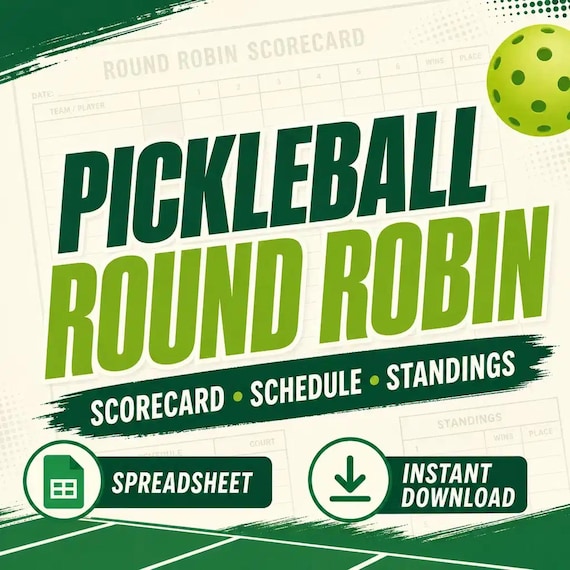
Pickleball Round Robin Spreadsheet
Pickleball round robin spreadsheet for clubs and social play: Excel-first workbook with players, schedule, scorecards, standings…