Small Business Templates · Jul 6, 2026 · 6 min read
Board Game Playtest Feedback Form: Questions and Tracker
What to put on a board game playtest feedback form: the questions to ask players, what the designer should log, and how to track changes between versions.

Board game playtest feedback form in 30 seconds
A board game playtest feedback form is a one-page sheet each player fills in right after the game. Keep it short and tied to the one thing this session is testing. The designer keeps separate notes, and every page carries the game version, date, and player count so you can compare sessions later.
- Quick ratings: fun, rules clarity, and replay interest on a 1-5 scale
- Game length: too short, about right, or too long
- Best moment and most confusing moment, in the player's words
- One rule or turn where play stalled
- Would you play again? (and, later in development, would you buy it?)
- Session details: game and version, date, player count, duration
The playtest questions worth asking players
"Did you have fun?" gets a polite yes and nothing you can act on. Questions about specific moments, rules, and decisions get answers you can use. Pick a few from each group below and match them to the question this playtest is meant to answer. A short form people actually finish beats a long one they rush.
- Rules: What do you wish you had known before your first turn? Is anything still unclear now that the game is over?
- Decisions: What did you want to do but couldn't? Did your choices feel like they mattered?
- Strategy: How would you describe your strategy? Did one approach feel too strong, or did any feel pointless?
- Pacing: When did you feel like you were waiting? How long did the game feel compared with how long it took?
- Endgame: Did the ending feel fair? Was the score math clear? Did anyone decide the winner without being able to win themselves (kingmaking)?
- Components: Could you read the card text and icons from your seat? Was anything missing or the wrong size?
- Overall: Would you play again? What one change would you make first?
Player form vs designer notes: keep them separate
Players tell you how the game felt. You watch where it broke. Keep those apart, or your own read of the session will quietly overwrite what players actually said. A clean setup has a player survey you hand out, plus designer pages you fill in yourself during and after play.
Designer pages work best as logs, not essays. Write down the turn or round, what happened, why it caused friction, your idea for a fix, and a priority. After several sessions, look for the same note in more than one group before you change the design. One loud table is not a pattern.
- During play: turn-by-turn friction (where people stalled, re-read rules, or asked the same question)
- After play: what worked, what to cut, what to add, and the next thing you want to test
- Rules problems: a numbered list with the rule area, the issue, how serious it is, and a fix idea
- Changes: a backlog with the reason, the effort, the priority, and a done box, so every version change has a reason behind it
How to run a playtest session with the forms
The routine below fits one game night. It works the same whether you test with friends, a design group, or a club table.
- 1. Before the table: write the one question this session should answer (for example, "Does the new scoring rule stop runaway leaders?"). Label the rulebook and cards with the version number.
- 2. Prep checklist: cards sleeved, spare tokens, a timer, and the players' OK if you plan to record.
- 3. Teach from a short script: a 30-second hook, setup steps, one example turn, and a scoring reminder. Note any house rules so you know what was really tested.
- 4. During play: log friction turn by turn and time the session.
- 5. Straight after the game: hand out the survey before anyone talks it over. Group discussion changes what people write.
- 6. Same night: write your debrief and your next hypothesis, then log the session in your tracker before you change a single card.
Track sessions in a spreadsheet, not a notebook
Paper forms capture the table. A spreadsheet shows the trend across sessions. Log one row per session with the date, build version, player count, session length, average fun score, the main confusion point, the main balance issue, the rule change you made, and whether it needs a retest. After five or six rows you can see whether a version actually got better, or just different.
Useful totals: sessions logged, how many still need a retest, average player count and length, the average fun score for the latest build, and how many sessions flagged a balance issue or a confusion point. If the confusion count drops after a rules rewrite, the rewrite worked.
Adjust the form to your stage and your table
The same form doesn't fit every test. Change the questions as the game matures.
- Early prototype: focus on rules clarity and turn structure. Can players teach a turn back to you? Skip the art and component questions for now.
- Middle prototype: balance and pacing. Ask about dominant or useless strategies, luck vs skill, catch-up, and whether the play time matches what the box will claim.
- Late prototype: first impressions, component readability, endgame fairness, and replay interest. This is the time to add "Would you buy this?"
- Blind playtests: players learn from the rulebook alone. Add questions on where the rulebook lost them, since you won't be there to watch.
- Classrooms and clubs: print one survey per player and use 1-5 scales so younger or newer players can answer fast.
Common playtest feedback mistakes
- Asking yes/no questions that can't lead to a change
- Forms that skip the version number, so you can't tell which build a note belongs to
- Letting players debate before they write. The loudest opinion ends up on every form
- Fixing the most recent complaint instead of the one that keeps coming back
- Changing several rules at once, so you can't tell which change helped
- Treating player-suggested fixes as instructions. Note the problem they hit, then design your own fix
A printable playtest kit if you'd rather not build the forms
Our Board Game Playtest Kit is an 18-page printable US Letter PDF (quick start on page 2), an editable Word copy of every page, and an Excel tracker. The pages cover everything above: Playtest Session Card, Player Profile Snapshot, Rules Clarity Checklist, First Impression Form, Turn-by-Turn Friction Log, Balance Notes, Component Feedback, Endgame & Scoring, Post-Game Survey (fun, clarity and replay 1-5, buy Y/N), Bug / Ambiguity List, Change Backlog, Print & Prototype Checklist, Facilitator Script Outline, Session Debrief and Recruitment Tracker.
The workbook has a Tracker tab with 100 session rows (test date, build version, player count, session length, fun score, confusion point, balance issue, rule change, retest needed, notes), a Dashboard that calculates the totals described above plus sessions by month, and a Template Bank that maps each page to its PDF page number. One honest note: it is a feedback and tracking kit. It does not include card face templates for your game's components.
See the files and previews on Etsy, or browse more small business templates.
Related guides
Getting ready to sell your game, or taking it to a con table? These guides cover the money side.
- Craft business pricing calculator guide: cost out a print run before you set a price
- Product pricing calculator spreadsheet: margins and cost of goods in one sheet
- Side hustle income and expense tracker: track con sales and expenses separately from personal spending
Frequently asked questions
What questions should be on a board game playtest feedback form?
Use a few quick 1-5 ratings (fun, rules clarity, replay interest), a game-length check (too short, right, too long), and three open questions: best moment, most confusing moment, and what you wanted to do but couldn't. Add one or two questions about the specific change this session is testing, and record version, date and player count.
How long should a playtest survey be?
Short enough that players finish it while the game is fresh, usually one page. A handful of focused questions gets better answers than a long survey people rush through. Keep the deep questions for a quick conversation afterward, and put your own observations on a separate designer page instead of the player form.
Should players fill in the form before or after talking about the game?
Before. Hand out the form as soon as the game ends, before the group starts discussing it. Once people talk, the loudest opinion tends to show up on everyone's form. Collect the written answers first, then open the floor and take notes on the discussion separately.
How many playtests does a board game need?
There is no fixed number. Keep testing until the same problems stop showing up across different groups. Track each session in a spreadsheet with the version number so you can see whether fun and clarity scores improve from build to build, and retest every rule you change before you call it fixed.
What is the difference between a playtest form and a playtest report?
A playtest form is what each player fills in at the table. A playtest report is the designer's summary of one session: the goal, who played, what broke, the scores and the changes planned. Many designers write the report from the forms, a friction log and a debrief page, then log one row per session in a tracker.
Can I edit the playtest forms for my own game?
Yes. Every page in our playtest kit comes as an editable Word file as well as the printable PDF, so you can rename fields, add questions about your own mechanics, or remove pages you don't need. The Excel tracker columns can be renamed too. Keep a blank master copy before you customize.
Printables used in this guide
Instant downloads from the SteadyStackStudio Etsy shop.
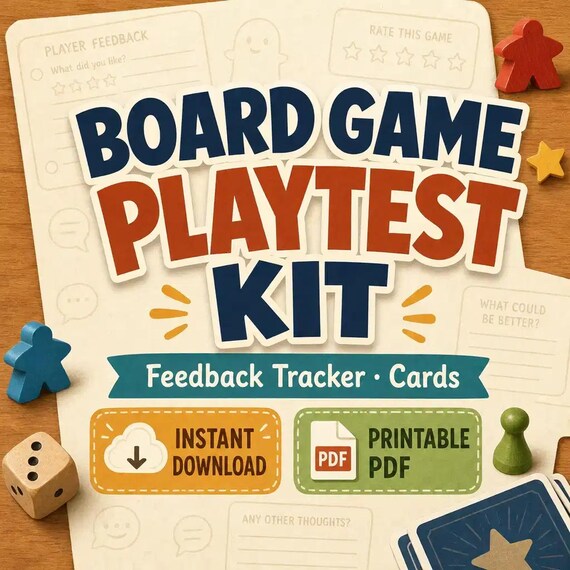
Board Game Playtest Kit
Capture playtest feedback, organize mechanics, and print playtest session cards without rebuilding the system from scratch.
Product Pricing Calculator Spreadsheet
Product Pricing Calculator Spreadsheet with Small Business Profit Margin, Cost of Goods, Wholesale and Retail Price Excel PDF…
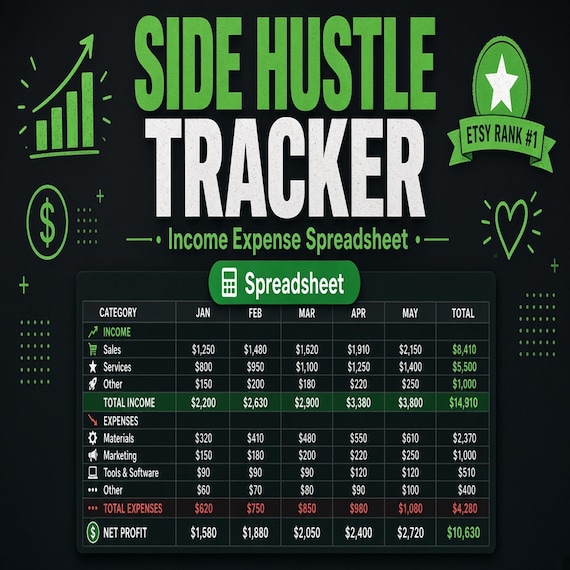
Side Hustle Income and Expense Tracker
Track a side hustle like a small business with an income and expense tracker, profit spreadsheet, mileage log and tax set-aside…
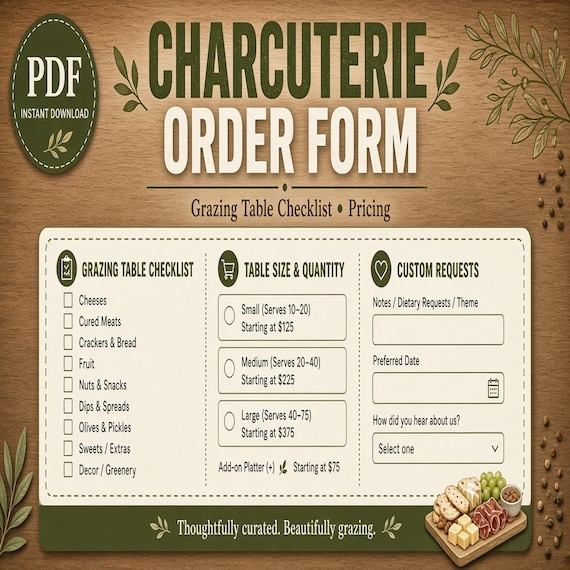
Charcuterie Order Form
Plan board sizes, ingredient prep, customer requests, pickup details, labels, and quote estimates in one kit.