Small Business Templates · Jul 2, 2026 · 5 min read
Craft Business Pricing Calculator Guide for Handmade Sellers
How handmade sellers can think through material costs, labor, fees, profit margin, inventory, and launch pricing.
Price the product by the real cost stack
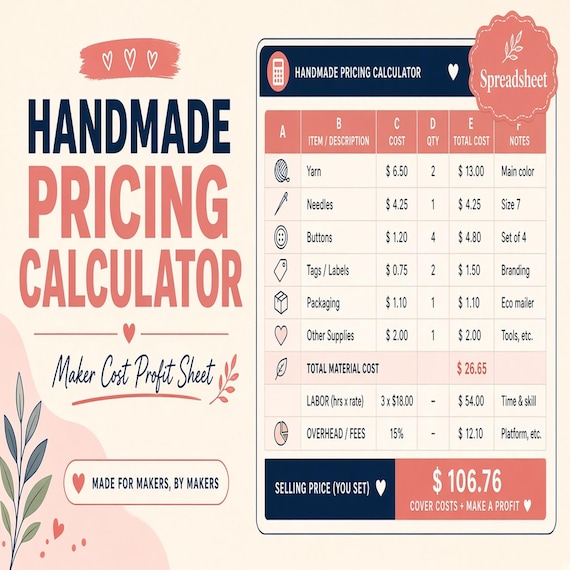
A handmade pricing calculator is useful when it forces every cost into view: materials, packaging, platform fees, labor time, overhead, taxes, and profit margin. Guessing from competitor prices can help you understand the market, but it should not be the only math behind the listing.
Before buying a calculator, check whether the spreadsheet has places for the inputs you actually use. Soap, candles, jewelry, baked goods, digital files, and craft-fair inventory all need slightly different cost notes.
- Materials: ingredients, blanks, packaging, inserts, labels, and waste.
- Labor: prep time, production time, packing time, and admin time.
- Fees: Etsy fees, payment processing, ads, shipping supplies, and discounts.
- Margin: the profit left after costs, not just the final selling price.
What a useful pricing spreadsheet should show
The best spreadsheet does more than produce one price. It should make the tradeoffs visible so you can test wholesale, retail, sale pricing, and bundle pricing without rebuilding the math each time.
- A product cost area for materials and batch quantities.
- A labor area for minutes or hours, with an hourly rate you can change.
- A fee/tax area for marketplace and processing costs.
- A profit or margin result that is easy to read before you list the item.
- A notes area for supplier changes, seasonal materials, or batch differences.
Use the calculator before a craft fair or launch
Pricing tools are strongest before you print tags, publish listings, or pack a market booth. Run a few products through the same sheet, compare margins, and decide which items deserve bundles, upsells, or simpler packaging.
If a product only makes sense at a price buyers will not pay, the calculator is doing its job. It shows whether the product needs a better bundle, cheaper inputs, faster production, or a different offer.
Check file format and editing fit
A handmade seller usually needs an editable workbook, not a locked PDF. Check whether the download is Excel, Google Sheets, printable PDF, or a bundle with several formats.
- Excel or Google Sheets is best when you need formulas and repeat calculations.
- Printable PDF is useful for quick market notes but not enough for a live pricing calculator.
- Editable cells should be obvious so you do not break formulas while changing materials or rates.
- If the listing shows dashboard previews, confirm there are actual input sheets too.
Who this fits and who should skip it
A pricing calculator fits sellers who make repeat products, change costs, run sales, or need to defend their prices with clearer math. It may be overkill for a one-off hobby item or a seller who already has a tested bookkeeping/pricing system.
- Good fit: soap makers, candle makers, craft sellers, jewelry makers, Etsy sellers, makers, bakers, and side-hustle shops.
- Not a fit: products with no repeat cost pattern, one-time personal projects, or businesses that need full accounting software instead of a lightweight calculator.
- Best next step: run one real product through the spreadsheet before changing the whole shop.
Recommended next step
Open the pricing spreadsheet preview, check the input fields, and make sure the file supports the way you actually sell. If the spreadsheet matches your product flow, use Etsy for the instant download and set up one product before adding more tools.
When a craft pricing calculator should connect to inventory
A craft pricing calculator is strongest when it does not stop at one retail number. Handmade sellers usually need to compare material cost, labor time, packaging, marketplace fees, wholesale margin, and how many finished pieces are ready to sell.
If you already track inventory somewhere else, check whether the pricing download can sit beside that tracker. A clean setup lets you update material costs once, test a new price, and decide whether a product is still worth making before the next market, listing refresh, or wholesale request.
- Use product costing fields for repeatable handmade items, not one-off guesses.
- Check whether fee, labor, tax, and profit-margin formulas are visible enough to review.
- Pair the calculator with inventory or product-card templates only when the same products are being repriced often.
When this download may not be the right fit
A good match for Craft Business Pricing Calculator Guide for Handmade Sellers should be practical, specific, and easy to use after checkout. It may not be the right fit if you need a fully custom service, physical printed materials shipped to you, professional review included with the purchase, or a file format the listing does not show. Use this page as a comparison step, not as a promise that every download will fit every business, event, printer, device, or professional requirement.
- Check the preview images and file details before opening Etsy.
- Choose the smallest complete download that solves the real job.
- Use related product pages when another format, worksheet role, template type, or bundle level fits better.
- For consent, financial, therapy, dental, beauty, or legal-adjacent uses, review the final wording or spreadsheet setup against your local requirements before relying on it.
Before you click through to Etsy
Use the SteadyStackStudio product preview as a final check. Confirm the title, price, file type, preview image, and related downloads all point to the same job you came here to solve. If the recommended product looks close but not exact, compare the other downloads in the same topic hub before leaving the site.
Once the product page and Etsy listing agree on what is included, the Etsy click is the checkout step rather than a blind jump. Answer the question first, compare the matching download second, then use Etsy only when the fit is clear.
- Open the matching product page if you want a larger preview and related options.
- Use the Etsy button when the file format and use case are clear.
- Skip the purchase if the preview does not show enough detail for the way you plan to use the download.
What buyers usually compare in craft pricing tools
Craft pricing tools tend to overlap across product costing templates, handmade price calculators, inventory trackers, fee calculators, and order-form spreadsheets. The safest comparison is to separate the math job from the selling job: first confirm the tool can calculate material cost, labor, fees, markup, and profit; then check whether it also tracks SKUs, batches, or sales channels.
A pricing spreadsheet is usually the stronger match when the same seller repeats products and needs editable formulas. A simple printable worksheet can work for one-off planning, but it will not help much if supply costs, labor time, or fee assumptions change every month.
- Look for visible input cells for materials, packaging, labor time, fees, and target margin.
- Check whether the preview includes product-level totals, profit per item, and a dashboard or summary view.
- Prefer a spreadsheet when prices need to update; prefer a printable only when you need a quick manual worksheet.
Printables used in this guide
Instant downloads from the SteadyStackStudio Etsy shop.
Handmade Pricing Calculator Spreadsheet
Handmade pricing calculator and craft inventory spreadsheet for sellers who need to price products, track material costs…
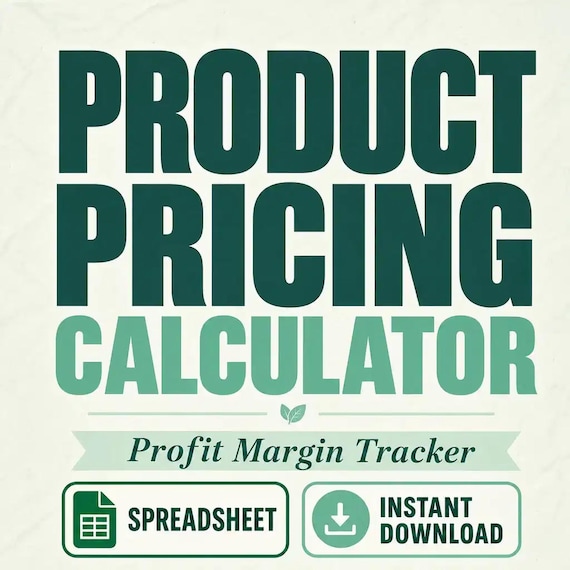
Product Pricing Calculator Spreadsheet
Product Pricing Calculator Spreadsheet with Small Business Profit Margin, Cost of Goods, Wholesale and Retail Price Excel PDF…
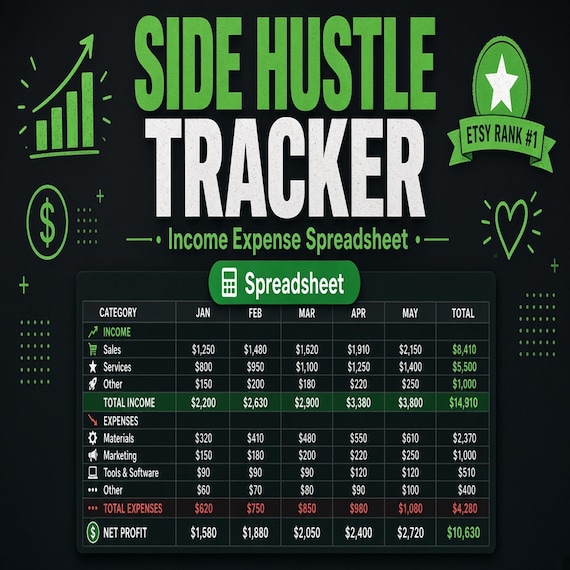
Side Hustle Income and Expense Tracker
Track a side hustle like a small business with an income and expense tracker, profit spreadsheet, mileage log and tax set-aside…
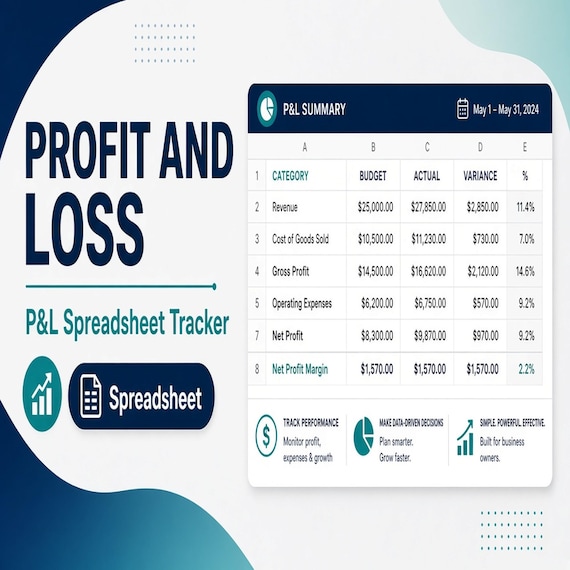
Profit and Loss Spreadsheet
Profit and Loss Spreadsheet Template, Income Expense Tracker Excel Google Sheets for small business owners who need a clean…