Therapy Worksheets · Sep 29, 2026 · 18 min read
Therapy Termination Worksheet Setup: Review Goals, Map Supports, and Leave a Maintenance Plan
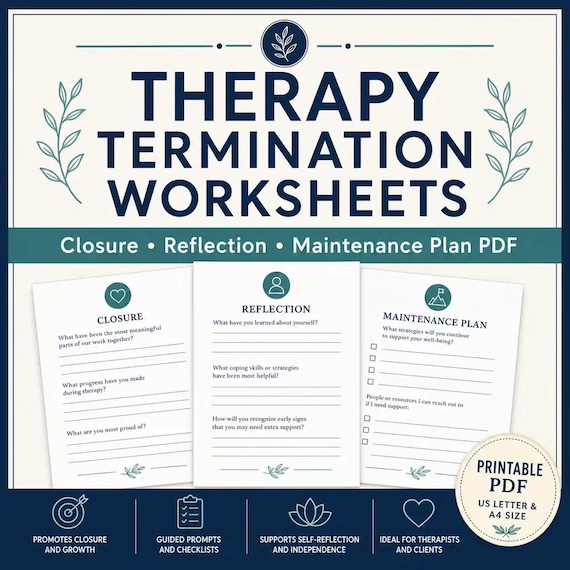
A practical setup for trained therapists, counselors, social workers, and supervised trainees who need a closure packet rather than another session note. Confirm the 17-page PDF, editable Word file, and ZIP, then choose only the pages that fit this ending: goal review, skills inventory, warning signs, a support map, a maintenance plan, and short reflections.
Confirm what the current download includes
Start with the files the current listing actually describes. The SteadyStackStudio Therapy Termination Worksheets pack is a closure and transition workbook for trained therapists, counselors, social workers, and supervised trainees who are planning a thoughtful ending or final session. The listed contents are a 17-page workbook, an editable Word version, a goal review and skills inventory, warning-sign, support-map, and maintenance-plan pages, plus client and practitioner reflection prompts. The files arrive as an instant digital download in one ZIP folder. No printed booklet, certificate, or binder ships.
Unzip the folder and compare it with that list before a name goes on any page. Confirm the US Letter PDF for printing or digital annotation, and the Word file for customizing headings and fields. The listing also notes an organized Excel workbook where one is included. If that workbook is in the ZIP, treat it as a light organizer for the pages the listing flags, not as a chart, a scoring tool, or a place to store a full case history. The first styled cover image on the listing was created with image software. The remaining listing previews are direct page renders from the files in the download. Use those page renders, not the cover, when you judge spacing, headings, and how much writing room a page actually has.
The listing is explicit about scope. This is a professional support resource. It is not a treatment protocol, a crisis plan, a diagnosis, or a substitute for clinical judgment. Ending care can require legal, ethical, safety, referral, and continuity steps that are not covered in these pages. It is also not an electronic health record and not a privacy-compliant record platform. You remain responsible for matching every page to the person, the reason care is ending, and the rules of your setting. Do not type identifying health information into a file store your organization has not approved.
- Verify the ZIP against the listed 17-page workbook, Word file, goal review, skills inventory, warning-sign page, support map, maintenance plan, and reflection prompts.
- Confirm US Letter PDF plus editable Word. Treat any Excel file only where the listing notes one.
- Judge layout from the page-render previews, not from the styled cover image.
- Treat the pack as closure paperwork, not as a diagnosis, a crisis protocol, or an approved record system.
Decide whether a closure packet is the missing job
This pack fits when the friction is the ending itself. You already know care is winding down, and you still need a short set of pages that can hold a goal review, the skills a person can name, a support map, and a maintenance plan. A progress-notes kit can hold an intake snapshot, SOAP, DAP, or BIRP pages, and a treatment-plan review. A formulation toolkit can hold a working hypothesis across the four Ps. A supervision pack can hold a de-identified case discussion and an hours log. Those jobs matter. None of them is the same as preparing the last conversations and leaving next steps visible on paper the person helped complete.
It also fits when the last sessions keep turning into a recap with no handoff. Practitioners often remember the original goals in a treatment plan, the skills in a homework log, and the people the client mentioned in a note from months ago. That works until the final hour arrives and those pieces are in three places. A goal-review page plus a skills inventory plus a support map is a better match for that hour than a thought record, a miracle-question page, or a grief wave tracker. The listing’s own order is short on purpose: select only the pages that fit the person and the reason for ending, complete them together when that is appropriate, use the maintenance plan to make supports and next steps concrete, and follow your professional, organizational, and continuity-of-care requirements.
Skip this pack, or use it only as a neighbor, if the real need is bereavement journaling, a stabilization packet, a required note format, a formulation, or a conversation about ambivalence. The grief workbook is a 31-page set with a grief-wave tracker, a memory letter, a hard-day coping plan, and anniversary pages. It is built for counselors, grief groups, and personal bereavement journaling, not for closing a course of care. The trauma bundle includes a window-of-tolerance map, a grounding menu, a support contact card, and a crisis reminder page. Use that when safety planning is the job. Choose the smallest download that matches the missing job, and do not buy a closure workbook because a different form is incomplete.
- Use this pack when goal review, a skills inventory, a support map, and a maintenance plan are the gap.
- Use a progress-notes kit when the missing job is SOAP, DAP, BIRP, or a treatment-plan review.
- Use the grief workbook for hard days, memory, and anniversaries, not as a substitute for ending paperwork.
- Use the trauma bundle when the missing page is a grounding menu or a crisis reminder, not a maintenance plan.
Name the kind of ending before you print
A final session is more than a date on the calendar. Before you print, write one sentence that names why care is ending and what this packet is supposed to hold. Planned endings are the job this download describes: a thoughtful transition or a final session you are preparing on purpose. Examples include a goal that has been met, a move, a change of insurance, the end of a training placement, or a mutual decision to pause. The sentence does not need clinical language. It needs to be specific enough that you can reject pages that do not serve it.
Unplanned endings are a different job. Someone may stop coming, cancel the last hour, or leave a message and disappear. A closure workbook cannot stand in for the note your setting requires about the last contact, the outreach you attempted, or the referral you offered. Do not fill a client reflection as if the person sat with you when they did not. If a practitioner reflection still helps you think, complete only that page, keep it under your own record rules, and do not present it as a shared ending the client agreed to. If your board, employer, or payer requires a discharge summary, write that summary in the system they already approve. This pack is not that summary.
Also name what the packet is not. It is not a full case review, a new treatment plan, or a crisis protocol you build in the last twenty minutes. If risk, a required referral, or a mandated report is part of the ending, those steps live in your existing procedures. The listing says those steps are not covered here. Put a sticky note on the working folder that says which outside step is already handled, and which page in this pack you still intend to use. That note keeps the workbook from quietly expanding into a job it was not sold to do.
- Write one sentence: why care is ending, and what this packet must hold.
- Use the pack for a planned transition or final session, which is the job the listing describes.
- Do not treat a blank client page as a record of an ending the person did not attend.
- Keep required discharge notes, referrals, and safety steps in the system your setting already uses.
Protect the master and make a working copy
Download the ZIP once, unzip it into a folder you will not edit, and duplicate that folder before any practice write-up. Name the untouched copy something obvious, such as original-termination-workbook, and leave it closed. Heading edits, sample language, and printer tests happen in the duplicate. If a Word field is overwritten or a PDF print is cropped, you still have the listed files for the next ending.
Keep the formats in their roles. Use the PDF when you want a stable print or a tablet annotation that should not drift. Use Word when a heading, prompt, or field label needs to match the language your setting already uses. If you change a heading, change only the label, not the job of the page. A goal-review page should still review goals. A support map should still name supports. Do not retitle the maintenance plan as a crisis plan, and do not retitle the warning-sign page as a risk screen. Those are different documents, and renaming them does not make this download into those documents.
If an Excel workbook is in the folder where the listing notes one, use it only as a light index: which ending, which pages you selected, which date you printed. Do not paste identifying health information into a spreadsheet that sits in a general downloads folder. Write a one-line use note on the working copy: this setting, this kind of ending, this date, this file format. That note stops last month’s sample from being handed to the next person. The download is for the purchasing practitioner’s own workflow. Do not forward the raw ZIP as a blank product to colleagues who did not buy it.
- Unzip once, keep a closed master, and edit only a duplicate.
- Use PDF for a stable print and Word for heading or field labels that must match your setting.
- Do not rename a maintenance plan into a crisis plan or a warning-sign page into a risk screen.
- If Excel is present, use it as a page index, not as a chart.
Select only the pages that fit this ending
Seventeen pages is a workbook, not a script for one hour. The listing tells you to select only the pages that fit the person and the reason for ending. That is the setup, not a suggestion you apply after you have already printed the stack. Open the PDF, skim the headings, and mark a short list before you print. A typical planned ending might need the goal review, the skills inventory, the support map, the maintenance plan, and one reflection. It might not need every prompt. Unused pages go back in the folder.
Match the page to the reason, not to a wish for a meaningful ritual. A move to another city may need the support map and the maintenance plan more than a long skills inventory. The end of a short skills group may need the skills inventory more than a warning-sign page. A mutual pause may need a maintenance plan with a clear review date, and almost nothing else. If you cannot say why a page is in the stack, leave it out. A thick packet at the end of care becomes another demand the person has to manage on the way out the door.
Complete pages together when that is appropriate, which is the listing’s second instruction. Sitting with a page is not the same as assigning the whole workbook as homework the night before the last session. If a person wants to draft a reflection between sessions, give them that one page, not the Word master and not the practitioner prompts. Bring the draft back, read it together, and decide what stays in the packet they take home. If collaboration is not appropriate — a person is too distressed, a session is too short, or your role does not include shared writing — do not force the page. A blank line is more honest than a sentence you supplied.
- Skim the 17-page PDF and mark a short list before you print.
- A usual planned ending may need goal review, skills, a support map, a maintenance plan, and one reflection.
- Leave out any page you cannot tie to the reason care is ending.
- Share one client page for homework if needed. Do not send the Word master or the practitioner prompts.
Review goals and inventory skills the person can name
The goal review is a look back at what this course of care was for, not a new treatment plan. Start from goals the person already agreed to, whether those lived in a treatment-plan review, a session note, or a sentence you both remember. Write the goal in ordinary language. Then mark what changed, what stayed unfinished, and what no longer belongs on the list. Unfinished is allowed. An ending packet that only lists victories will not help the person recognize the work that is still theirs after they leave.
The skills inventory sits next to that review, and it should stay concrete. Ask what the person can actually do on an ordinary Tuesday, not what the model says they should have learned. A skill that never left the room does not belong on the list they take home. If you practiced a grounding step, a boundary sentence, a sleep routine, or a way to ask for help, write the version they can repeat without you in the room. If you are not sure they can repeat it, that uncertainty belongs in your practitioner reflection, not as a polished skill on their page.
Do not let the goal review swallow the hour. Two or three goals are enough. If the case formulation or the treatment-plan review already holds the long history, leave that history there. This page is the handoff version: what we were working on, what is different, what is still open. If the person disagrees with your summary, their wording wins on the page they will keep. Your differing view can go in the practitioner reflection or in the progress note your setting requires. Those are separate papers on purpose.
- Review goals that were already agreed, including ones that stayed unfinished.
- Inventory only skills the person can describe without you supplying the answer.
- Keep the long case history in the formulation or the treatment-plan review.
- If you disagree, keep their wording on the page they take home.
Use warning signs and a support map without building a crisis protocol
The warning-sign page and the support map are paired, and they are easy to overbuild. A warning sign, in this pack, is an early cue the person already recognizes: sleep collapsing, isolating, skipping meals, a thought pattern they have named before, or a situation that usually pulls them off course. It is not a diagnosis, and it is not a formal risk screen. Write cues in the person’s language. If you need a structured risk screen, use the form your setting already requires. Do not stretch this page until it looks like one.
The support map names people, places, and routines that can carry the person after sessions stop. That might be a friend who answers the phone, a group they already attend, a primary-care visit that is already scheduled, a faith community, or a standing walk. It is not a referral form. If a formal referral is required, complete it in the system your practice uses, and do not assume a name on this map counts as that referral. The listing is clear that referral and continuity steps may be required and are not covered here. The map is still useful. It makes the maintenance plan specific instead of a slogan about “using supports.”
Keep this pair separate from a safety plan. The trauma worksheet bundle includes a support contact card and a crisis reminder page because stabilization is a different job. If a person needs those pages, use that bundle or your required crisis form. Do not copy crisis language onto the warning-sign page and call the workbook complete. If there is no current safety concern, do not invent one to fill the lines. A short, true list is better than a dramatic list the person did not endorse. When you are done, read the two pages aloud together and ask whether each name and each cue is still accurate.
- Write warning signs as early cues the person already recognizes, in their words.
- Use the support map for people, places, and routines, not as a formal referral form.
- If a referral is required, complete it in the system your setting already uses.
- If a crisis reminder or grounding menu is the real need, use the trauma bundle or your required form instead.
Make the maintenance plan concrete
The maintenance plan is the forward page. A discharge-style summary looks backward at what happened in care. This plan looks at what happens next, and the listing asks you to use it to make supports and next steps concrete. Concrete means a person could follow the line without calling you to translate it. “Keep using skills” is not concrete. “On Sunday night, write three lines in the notebook we already used, and text Alex if sleep is under five hours for three nights” is concrete, if that is actually what you agreed.
Tie each line to a page you already completed. A next step that is not on the skills inventory is a new assignment, not maintenance. A support that is not on the map is a name you hope they will remember. Put the review date on the plan if there is one: a booster session, a check-in with another provider, or a date the person chose to reread the packet. If there is no planned contact, say that plainly. An empty “call if needed” line is less useful than a sentence that names who they call first, and what “needed” looks like in the warning signs you just wrote.
Stop when the plan fits on the page. A maintenance plan that restates the whole workbook will not be opened later. Read it once from the person’s chair: Can I do this without the therapist in the room? Is every name someone I would actually contact? Is there one step for an ordinary week and one step for a harder week? If the answer is no, cut or rewrite before you print the copy they keep. Your own follow-up tasks — a letter your setting requires, a supervision question, a file close-out — do not belong on their copy. Those go on the practitioner side.
- Write next steps a person could follow without calling you to translate them.
- Pull skills from the inventory and names from the support map. Do not add new assignments on the way out.
- Name a review date if one exists. If no further contact is planned, say that plainly.
- Keep your own follow-up tasks off the copy the person takes home.
Keep the two reflection pages in their lanes
The pack includes client and practitioner reflection prompts, and they are not two copies of the same page. The client reflection is for what the person wants to remember about the work, the relationship, or the ending. Offer it when collaboration fits. Do not assign it as a test of gratitude, and do not require a particular feeling about ending. Some people are relieved. Some are angry. Some are unsure. A prompt that only has room for thanks will produce a polite sentence and hide the rest. If the Word file lets you adjust a heading to match language you already use, adjust the label, not the job: this page is still their reflection, not your evaluation of them.
The practitioner reflection is for you. Use it to notice what you would do differently, what you want to take to supervision, and what you must not leave only in memory. It is not a progress note unless your setting has agreed that this page meets that requirement. Most settings will still want the ending recorded in the note format they already use. The progress-notes download includes SOAP, DAP, BIRP, and narrative session pages for that job. Complete the required note there, or in your approved system, and keep this reflection as the thinking page.
Store the two reflections apart if your policy says the person should not receive your process notes. Hand them the pages you completed together. Keep the practitioner page in the working folder under the same rules you use for other professional notes. Do not photograph both pages into one camera roll and call that a file. If a supervisee is practicing with fictional information, mark the page as practice before it can be mistaken for a live ending. The supervision pack is the better home for a de-identified case discussion and an hours log. Bring the question there. Do not paste a client’s words into a supervision worksheet that was built to stay de-identified.
- Use the client reflection for what they want to remember, including mixed feelings about ending.
- Use the practitioner reflection for your own learning and supervision questions.
- Still write any required ending note in the format your setting already uses.
- Do not hand over practitioner process notes, and do not paste identifying detail into a supervision log.
Print, hand off, and close the working folder
Print from the PDF after the words are settled, not from a Word file you have not checked. US Letter is the listed size. Print one sample page first and look at the margins, the heading, and the writing lines. A page that clips the bottom line on your printer will clip every copy you make for the person. If you annotated on a tablet, confirm the annotation exported. A highlight that exists only in the app is not in the packet they take home. If Word reflowed a prompt onto a second page, decide whether that second page is worth including before you staple.
Assemble the handoff in the order you will actually walk through: goal review, skills inventory, warning signs, support map, maintenance plan, and the client reflection if you used it. Leave the practitioner reflection out of that stack. Read the maintenance plan last, so the hour ends on next steps rather than on a recap. Offer a folder or a single staple, not a loose pile. If they want a digital copy, send the completed PDF pages you agreed to share, not the original ZIP and not the Word master. Say where the paper will live on their side — a notebook, a kitchen drawer, a phone photo they choose to take — and where your copy will live on yours.
Then close your side. File or dispose of completed pages under the privacy workflow you already follow. This download is not a privacy-compliant platform, so a downloads folder, a shared drive, or a personal email thread is not a record system. Update the progress note, the treatment-plan review, or the discharge summary your payer or employer requires, in the place those documents already live. If you will discuss the ending in supervision, take a de-identified question, not the client’s packet. When the working folder is done, rename it with the date and move it out of the inbox where the next ZIP will land. The closed master stays untouched for the next planned ending.
- Test-print one US Letter page and check margins, headings, and writing lines before you print the set.
- Hand off the shared pages only. Keep the practitioner reflection and the Word master.
- Send a completed PDF if they want a digital copy. Do not send the original ZIP.
- Record the ending in your required note system, then close the working folder so it cannot be reused by mistake.
Printables used in this guide
Instant downloads from the SteadyStackStudio Etsy shop.
Therapy Termination Worksheets
A calm, practical download for trained therapists, counselors, social workers, and supervised trainees planning a thoughtful…
Grief Worksheets
Grief Worksheets with Grief and Loss Therapy Workbook, Bereavement Journal Prompts, Coping with Grief, Grief Support Printable…
Trauma Therapy Worksheets Bundle
Trauma Therapy Worksheets Bundle with Grounding Techniques, Safety Plan, Window of Tolerance, PTSD Coping Skills Printable PDF.
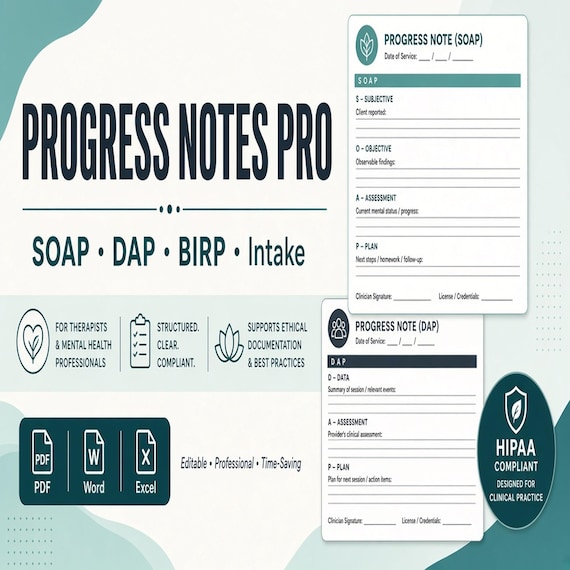
SOAP Note Template and Therapy Progress Notes
Therapist Progress Notes Pro — a mid-tier multi-format documentation pack for clinicians who want real SOAP, DAP, and BIRP…