Therapy Worksheets · Jul 22, 2026 · 11 min read
Narrative Therapy Question Cards: Externalizing, Unique Outcomes, and Flexible Use
A scope-aware guide for trained practitioners using narrative therapy question cards as flexible conversation supports, from naming a problem and mapping its effects to noticing unique outcomes and closing with a client-chosen next step.
Confirm what the focused narrative question download includes
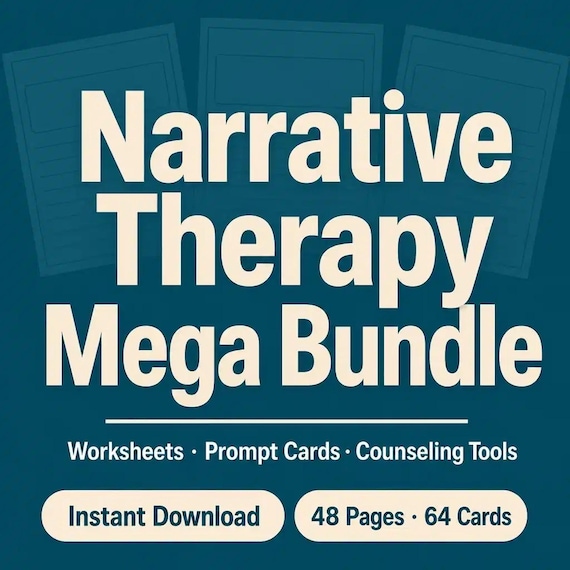
Begin with the resource that is actually offered rather than expecting a complete treatment system. The featured SteadyStackStudio download is described as a PDF resource with printable narrative therapy worksheets and client handouts, externalizing and re-authoring question pages, prompt-card-style questions, and session-support pages for structured reflection. It is intended for therapists, counselors, social workers, and other mental health professionals, including work with adults and teens when appropriate. No physical item is shipped.
Review the current Etsy previews, professional-use note, and license before bringing a page into practice. Decide whether you need a compact bank of questions, a client-facing handout, or a broader worksheet collection. The download can organize prepared prompts, but it does not provide clinical training, assessment, diagnosis, informed consent, crisis response, individualized care, or an approved health-record system. If the purpose or scope is unclear, resolve that first instead of asking the printable to make the decision.
- Check that the focused PDF format and page style fit the setting where you plan to use them.
- Distinguish practitioner prompts from pages a client may keep or complete.
- Confirm the current previews and usage terms before purchase.
- Use the resource only within the training, consent, supervision, and policies that already govern the work.
Choose the conversation purpose before choosing a prompt
A card becomes more useful when it supports a clear conversational purpose. Before selecting questions, identify what the client has said would be helpful to explore and whether a structured prompt is welcome. The purpose might be to find language for a problem, understand how it affects daily life, notice times when its influence changes, or develop a preferred account of what matters. Those are different jobs, and they do not require every page in the download.
Choose one starting point and keep permission visible. A client can decline a question, change its wording, ask to pause, or prefer an ordinary conversation without a page. Avoid introducing a card simply because it is next in the file or because a completed worksheet feels productive. The practitioner remains responsible for timing, pacing, accessibility, and fit. A useful prompt opens space for the person's knowledge; it should not narrow the meeting into collecting answers for the form.
- Name the purpose of the conversation in the client's language.
- Select only the few prompts that may support that purpose.
- Offer a real choice to skip, change, pause, or put away the page.
- Return to ordinary dialogue whenever the form starts directing the meeting.
Use the client's language when naming the problem
Externalizing language is not a contest to invent the cleverest name. Listen first for the words the client already uses and ask whether it would be useful to speak about the problem as something affecting the person rather than as the person's identity. A workable name should feel recognizable and respectful to the client. It may change as the conversation develops, and the client does not need to accept the practitioner's preferred label.
Keep description separate from diagnosis, judgment, and blame. If a proposed name feels trivializing, culturally awkward, overly dramatic, or disconnected from the person's experience, set it aside. Some concerns may not be helped by externalizing language in that moment. The question card is a prompt, not proof that a particular framing is correct. Record only the wording that the client chooses and that belongs in the approved purpose of the page.
- Listen for the client's words before suggesting a name.
- Ask whether separating the person and problem feels useful rather than assuming it will.
- Let the name change, remain plain, or disappear as the conversation develops.
- Avoid labels that reduce identity, culture, relationships, or material conditions to a single problem.
Map the problem's effects without mapping the person
Once a workable name exists, questions can explore where and when the problem has influence. A practitioner might invite the client to notice effects on routines, relationships, choices, attention, hopes, or participation, while staying within the client's goals and the scope of the meeting. The purpose is to understand a pattern and its context, not to assemble a list of everything that is wrong with the person.
Pace this part carefully. Repeated effect questions can feel like an interrogation or can give the problem more space than the client wants it to have. Check what seems important, what should remain private, and what the client wants to understand next. Keep social, cultural, relational, access, safety, and practical conditions visible rather than treating every difficulty as an internal failure. When risk, crisis, or needs beyond the worksheet emerge, follow the appropriate professional process instead of continuing the card sequence.
- Explore influence in specific contexts rather than making global statements about the person.
- Ask which effects matter to the client and which do not need further attention.
- Keep external conditions and relationships visible in the account.
- Move to the setting's proper response when a printable is no longer sufficient.
Slow down for meaning and preferred direction
Mapping effects is only one part of the conversation. Leave room to ask why a particular effect matters to the client and what the concern may reveal about a valued direction, relationship, hope, commitment, or way of living. The answer belongs to the client. A practitioner should not infer a preferred story from a worksheet response or convert a difficult experience into an upbeat lesson before the person is ready.
Use the page to hold a few key words, not to compress a complex account into tidy boxes. Clarify what the client would like more of, less of, protected, restored, or understood. Notice uncertainty and mixed feelings rather than forcing a single conclusion. If the preferred direction is not yet clear, that can be a valid place to stop. A question is doing useful work when it supports curiosity and choice, even if it does not produce a completed statement.
- Ask what makes an effect important instead of deciding its meaning for the client.
- Keep values, hopes, relationships, and cultural context connected to the discussion.
- Allow uncertainty, contradiction, and unfinished language to remain visible.
- Do not rush from a difficult account to a positive interpretation.
Notice unique outcomes without turning them into a test
In narrative conversations, a unique outcome can point to a time when the problem was absent, smaller, interrupted, questioned, or met differently. It does not need to be dramatic. The useful detail may be a brief choice, a moment of resistance, a supportive response, a skill the person used, or a situation in which the expected pattern did not fully take over. Ask whether the client sees the moment as meaningful before building further questions around it.
Avoid presenting exceptions as evidence that the client should always be able to overcome the problem. Context changes what is possible, and one different moment is not a promise about the future. Explore what helped, who noticed, what the moment may say about the client's intentions, and whether any part deserves a place in the preferred account. If the client sees it as ordinary or irrelevant, accept that response rather than searching for the answer the card appears to expect.
- Look for small differences as well as major turning points.
- Ask the client whether the moment is significant before interpreting it.
- Explore context and support instead of crediting willpower alone.
- Never use an exception to blame someone when the problem returns.
Connect preferred moments to skills, values, and witnesses
When a client wants to stay with a preferred moment, questions can help describe it more fully. Invite detail about what the person did, what they were standing for, what knowledge or skill was present, and which relationships or communities supported the response. Ask who might recognize this account and what that person has seen over time. The aim is not to award a strength label but to make the client's own knowledge more visible and specific.
Keep ownership with the client. A practitioner can reflect language and preserve useful detail without turning the account into a fixed identity or a promise that every future situation will unfold the same way. Some clients may want a brief written reminder; others may prefer that the conversation remain spoken. Before involving a supportive person or sharing any page, follow consent, confidentiality, and the setting's communication policies. A witness is not automatically safe, available, or appropriate.
- Describe the action and context before assigning a broad strength word.
- Ask what the moment says to the client about what matters to them.
- Explore supportive relationships only when the client wants to do so.
- Follow consent and confidentiality rules before sharing any written account.
Use prompt cards as a menu rather than a script
Prompt cards are easiest to use when the practitioner reviews them before the meeting and selects a small set that may fit the purpose. Keep the rest available, but do not commit to a fixed order. Listen to the answer, ask a natural follow-up, and allow the client's language to change the direction. Skipping most of the cards can be a sign of responsive use rather than incomplete work.
Watch for script-like habits: reading several questions without responding, moving on before an answer has settled, repeating a prompt in search of a preferred response, or looking at the page more than the person. Place cards where they support attention rather than divide it. After the conversation, note which wording invited reflection and which wording did not fit. Adapt future selection within the license and professional context, while preserving an untouched original file for reference.
- Preview and select a small prompt set before the meeting.
- Follow the client's answer instead of the printed order.
- Skip or reword prompts that feel repetitive, leading, or disconnected.
- Keep one original copy of the download and use a separate working copy where permitted.
Adapt the page for age, access, culture, and setting
The current product description mentions adult and teen counseling where appropriate, but a shared age label does not make one wording style suitable for everyone. Review reading level, visual density, language, attention demands, disability access, cultural meaning, and the way the setting normally handles worksheets. Explain unfamiliar terms in ordinary language and ask how the person would phrase the question. Do not make a page childish by default for a younger client or overly abstract for an adult.
Choose whether the practitioner reads prompts aloud, offers a printed page, writes key words collaboratively, or keeps the card out of the client's view. Consider privacy when printing, displaying, transporting, or discarding pages. If translation, interpretation, communication support, or an accessible format is needed, use qualified and approved resources for the setting. A quick edit can improve fit, but it cannot replace accessibility planning, cultural humility, developmental judgment, or individualized clinical care.
- Check reading level, layout, sensory demands, and communication preferences before use.
- Invite the client to restate a prompt in language that feels natural.
- Choose spoken, written, collaborative, or practitioner-only use deliberately.
- Use approved support when access or language needs exceed a simple wording change.
Separate client handouts from the clinical record
Decide the status of each page before personal information is written on it. A blank prompt card, a worksheet the client keeps, a practitioner preparation page, and documentation required by the setting are not the same record. Explain who will hold the page, whether it will be stored, and how it may be used. Collect only the information needed for the agreed purpose rather than filling every available space.
The printable is not an approved electronic health record, consent form, assessment, treatment plan, or progress-note standard. Follow the organization's current documentation, privacy, retention, access, and disposal rules. If a useful phrase belongs in the clinical record, document it through the approved process instead of assuming the completed worksheet can replace required notes. Keep blank masters separate from completed pages, and never reuse a client-marked copy as the starting point for another person.
- Name who owns or keeps the page before it contains personal information.
- Use the approved record system for documentation the setting requires.
- Collect only information that serves the agreed purpose.
- Store and dispose of completed pages under current privacy and retention rules.
Close with a client-chosen next step and a fit check
A structured conversation does not need to end with every card answered. Leave time to ask what stood out, what felt accurate or inaccurate, and what the client wants to carry forward. Summarize using the person's words and check that the summary fits. If a preferred moment or direction became clearer, the next step may be another conversation, a small observation, a written reminder, or no assigned task at all.
Also review the effect of the resource itself. Ask whether the cards made the conversation easier, more distant, more pressured, clearer, or less useful. Record practitioner learning without placing unnecessary personal detail in a reusable template. If the page did not fit, do not treat completion as the goal. The best closeout may be to set it aside and return to another approved approach. A printable earns its place by supporting the relationship and purpose, not by creating a stack of finished forms.
- Reserve time to summarize and check the wording with the client.
- Let the client decide what, if anything, should be carried forward.
- Ask directly how the prompt-card format affected the conversation.
- Retire or adapt the page when it does not support the agreed purpose.
Choose the focused question pack or a broader worksheet set
The featured Narrative Therapy Questions PDF is the clearest fit when the main need is a focused collection of externalizing prompts, re-authoring questions, prompt-card-style supports, and printable reflection pages. It suits a trained professional who already understands the framework and wants a compact resource to review and select from. Confirm the current page previews, digital format, professional-use note, and license before checkout.
Choose a broader narrative therapy bundle when you want a larger mix of counseling tools and prompt cards. The counseling worksheets pack and the teen-and-adult narrative worksheet set offer adjacent page collections for different scopes, while the therapist notes and planning template supports administrative records rather than replacing the conversation resource. The motivational interviewing toolkit belongs to a different approach and should be selected for its own purpose. None of these downloads provides therapy, training, diagnosis, crisis care, or individualized professional judgment. Match the purchase to the page role you actually need.
- Choose the focused questions PDF for externalizing, re-authoring, and prompt-card support.
- Choose a broader narrative bundle when the intended worksheet roles extend beyond a compact question bank.
- Use administrative templates only for the recordkeeping jobs they are designed to support.
- Verify current contents, fit, digital delivery, and usage terms before checkout.
Printables used in this guide
Instant downloads from the SteadyStackStudio Etsy shop.
Narrative Therapy Worksheets Mega Bundle
Narrative Therapy Mega Bundle — a printable clinical worksheet kit gift for a therapist, counselor, or social worker who uses…
SOAP Note Template and Therapy Progress Notes
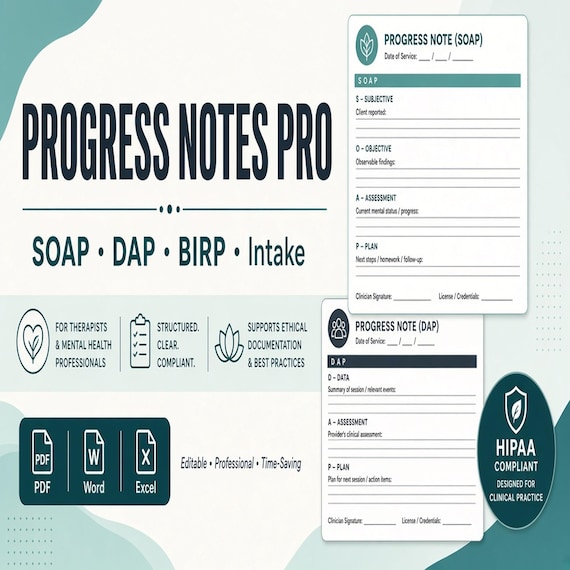
Therapist Progress Notes Pro — a mid-tier multi-format documentation pack for clinicians who want real SOAP, DAP, and BIRP…
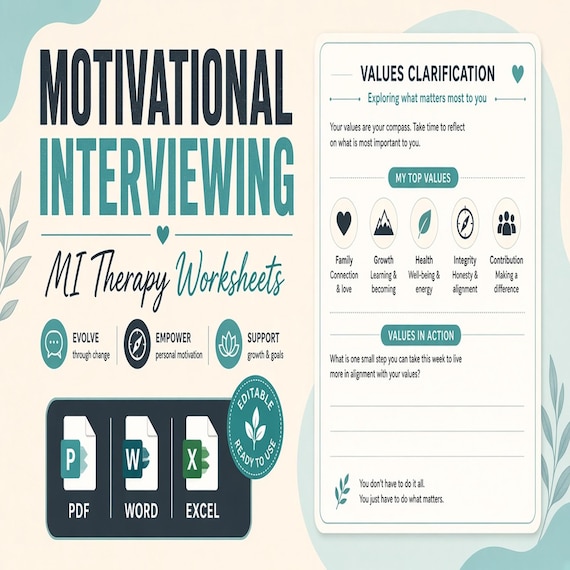
Motivational Interviewing Worksheets
A calm, practical download for counselors, social workers, coaches, supervised trainees, and other trained helping professionals…
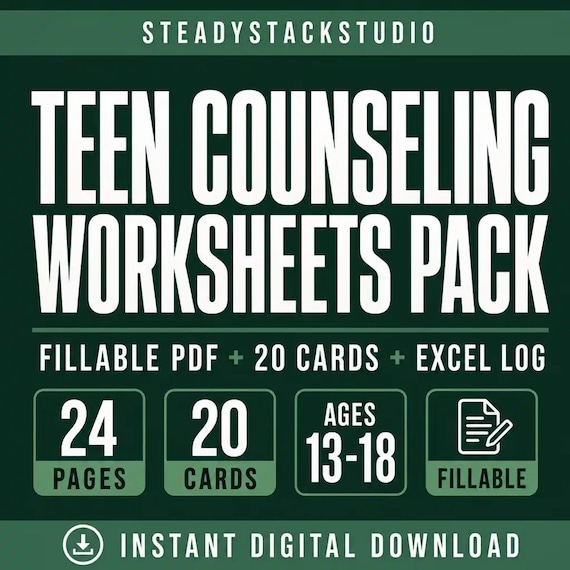
Teen Therapy Worksheets
Teen Counseling Worksheets Pack (ages ~13–18): 24-page fillable PDF + 20 prompt cards + Word + Excel mood/school log.