Budget & Money Planners · Jul 12, 2026 · 10 min read
Debt Snowball vs Avalanche Spreadsheet: How to Choose and Set Up a Payoff Plan
A practical guide to choosing a debt snowball or highest-interest-first approach, entering accurate balances, protecting minimum payments, tracking real results, and deciding whether a payoff spreadsheet fits your routine.
Start with a complete debt list, not a dramatic payoff date
A payoff tracker is only as useful as the starting information entered into it. Before comparing methods or looking at a projected finish date, make one complete list of the debts you intend to manage. Give each account a plain nickname, then record the current balance, annual percentage rate, required minimum payment, due date, and the date of the balance you used. Add a note for any promotional rate and its expiration date. That snapshot turns a vague goal into a set of accounts that can be checked one by one.
Do not put full card numbers, bank login details, passwords, security codes, or other unnecessary sensitive information in the workbook. The tracker needs enough detail to distinguish one account from another, not enough detail to access the account. Keep the latest creditor statement as the source record and treat the spreadsheet as a planning view. If two people share the plan, agree on where the maintained copy lives and who updates it so separate versions do not quietly drift apart.
- Use a short account nickname instead of a full account number.
- Record the balance date as well as the balance itself.
- Include the minimum payment, due date, rate, and any promotional-rate deadline.
- Keep statements as the source of truth for amounts actually owed.
Understand what snowball and highest-interest-first actually change
Both common payoff approaches begin with the same foundation: continue making the required minimum payment on every included debt, then direct the available extra amount to one target. The debt snowball orders targets from the smallest balance to the largest. Its advantage is an earlier visible win when a small account reaches zero. That progress can make a long plan easier to continue, although paying smaller balances first may cost more interest than prioritizing the highest rate.
The highest-interest-first approach, often called the debt avalanche, orders targets from the highest annual percentage rate to the lowest. It is designed to attack the costliest rate first and may reduce total interest compared with a balance-first order, assuming the same payments and no new charges. The first account may take longer to clear, especially when the highest-rate balance is large. The better method is the one whose tradeoff you understand and can maintain; a spreadsheet cannot decide which source of motivation matters more to you.
- Snowball order: smallest balance first.
- Highest-interest-first order: highest rate first.
- Both methods keep minimum payments going on the other included accounts.
- Choose an order deliberately instead of switching targets after every statement.
Gather one clean starting snapshot before entering formulas
Collect statements within the same short window so the balances describe roughly the same moment. A statement balance, current online balance, and formal payoff amount can differ because of purchases, credits, fees, or interest that posted on different dates. Pick one consistent starting convention, label it, and expect to replace estimates with posted results during the monthly review. If an account has a variable rate, record the current rate and flag it for rechecking rather than assuming it will stay fixed for the full plan.
Also decide which obligations belong in this particular tracker. Credit cards and ordinary loans may be easy to compare, while a mortgage, federal student loan, tax debt, disputed account, medical payment plan, or debt already in collections can have different rules and options. A neat table does not make unlike obligations interchangeable. When an account needs special handling, keep it visible in the overall budget but get appropriate information before folding it into an automatic payoff order.
- Gather recent statements before building the first account list.
- Label whether each opening number is a statement balance, current balance, or payoff quote.
- Flag variable rates and promotional periods for later review.
- Separate debts that need legal, tax, loan-servicer, or counseling guidance.
Protect every required minimum before assigning an extra payment
The extra-payment number should come from a realistic budget, not from the amount you wish were available. List income timing, essential expenses, minimum debt payments, and a reasonable cushion for irregular costs before committing extra money to a target. If income changes from paycheck to paycheck, use a conservative base amount for the recurring plan. Extra income can be handled separately when it actually arrives instead of being promised twice in advance.
Keep each minimum payment visible even when that account is not the current target. Missing a required payment can lead to fees, collection activity, or other consequences that a projected payoff chart does not show. If the budget does not cover the minimums, the immediate task is not choosing snowball versus avalanche. Contact the creditor promptly to ask about manageable options and consider reputable credit counseling. A template can organize the conversation, but it cannot negotiate or change the terms of an account.
- Fund essential expenses and required minimums before setting the recurring extra amount.
- Use a conservative extra payment when income varies.
- Do not count a hoped-for bonus, refund, or sale until it is available.
- Seek direct help when minimum payments are not manageable.
Use one target and one clear rollover rule
Once the method is chosen, mark one account as the active target. Pay the planned minimums everywhere, then place the recurring extra amount on that target. When it reaches a verified zero balance, roll the amount that had been going to it toward the next target. For example, the next target receives its own minimum plus the old target's former payment and the original recurring extra amount. Writing the rule once prevents the newly freed money from disappearing into an unlabeled category.
Decide in advance how one-time money will be treated. A tax refund, gift, overtime payment, or sale may go to the target, a cash reserve, an overdue bill, or another priority. It should not be entered as recurring monthly money unless it truly recurs. If you intentionally split extra payments across several debts, document why; otherwise, multiple small transfers can make it hard to tell whether the selected method is being followed. The tracker should make the next action obvious, not create a competition among every row.
- Mark one active target at a time.
- Write down what happens to the old payment after an account reaches zero.
- Keep recurring extra money separate from one-time windfalls.
- Document any deliberate exception to the chosen order.
Treat payoff projections as scenarios, not promises
A projected payoff date depends on assumptions. Rates may change, interest may accrue daily, payments may post on different dates, and new fees or purchases can alter the balance. A spreadsheet can still be valuable because it shows how the plan behaves under stated inputs. The useful question is not whether one date looks exciting; it is whether the assumed payment is affordable and whether the order still makes sense when the inputs change.
Run a plain base scenario first. Then test a lower-extra month and one realistic one-time payment without overwriting the base values. Compare snowball and highest-interest-first using the same opening balances and the same total monthly payment so the difference comes from order rather than from a hidden change in cash. Save the date of each scenario. When the plan is reviewed later, you will know whether the projection changed because the real balances changed or because someone edited an assumption.
- Use the same balances and payment amount when comparing methods.
- Keep a base scenario before testing alternatives.
- Expect rates, fees, posting dates, and new charges to affect real results.
- Date each scenario so old projections are not mistaken for current plans.
Reconcile the tracker with posted results every month
After payments post, compare the workbook with the actual statements. Record the payment date and amount, update the balance, and check whether the rate or minimum changed. A payment may be divided among interest, fees, and principal differently than a simple model expects. The creditor's posted balance controls. If the spreadsheet and statement disagree, investigate the difference rather than forcing the statement to match the projection.
Use one consistent monthly review date and keep a short change note. Record new charges, returned payments, fees, rate changes, and extra payments separately enough that the story remains understandable. Do not mark an account paid merely because the planned final payment was sent; wait for a zero balance or written payoff confirmation and check for trailing interest when applicable. Once confirmed, preserve the completed row instead of deleting it. Seeing the history helps verify the rollover amount and keeps the progress real.
- Update from posted statements on a consistent review date.
- Investigate differences between projected and actual balances.
- Confirm zero before rolling the full payment to the next target.
- Keep completed accounts in the history rather than erasing them.
Connect the payoff tracker to a budget without duplicating the same payment
A payoff tracker, paycheck budget, and bill calendar answer different questions. The payoff tracker shows account order and progress. The paycheck budget shows when cash is available. The bill calendar shows when required payments are due. They can work together, but copying every field into every file creates conflicting balances and increases maintenance. Choose one place for the current debt balance and one place for the cash plan, then link the review routine with dates and short references.
Watch for double counting. If a credit card minimum already appears in the paycheck budget, do not add the same amount again as a separate general debt expense. If the extra payment is built into the paycheck plan, label which target receives it. When an account is paid, update both the debt order and the future cash plan before spending the freed amount elsewhere. A small monthly checklist is usually more reliable than a complicated network of copied tabs.
- Keep account order and balances in the payoff tracker.
- Keep cash timing in the paycheck budget.
- Keep due dates in the bill calendar.
- Check that minimums and extra payments appear only once in the cash plan.
Choose Excel, Google Sheets, or printed pages by how you will maintain the plan
A digital workbook is useful when balances, rates, or scenarios change often. Excel can fit a local-file routine, while Google Sheets can make an authorized shared copy easier to reach from several devices. Compatibility still needs a real test: imported files can display formulas, formatting, protected cells, or print areas differently. Keep an untouched original download, make a working copy, and verify the important totals before relying on a converted version.
Printed pages can work well for a monthly meeting or a visible progress log, but they require manual updates and should not become the only current record. Print a test page before producing a binder, and avoid leaving financial details in an open household location. Whichever format you choose, add the monthly review to a calendar. The best file type is not the one with the most features; it is the one you can open, understand, protect, and update consistently.
- Preserve the original download and work from a copy.
- Test important totals after importing a workbook into another app.
- Use printed pages as a maintained review tool, not an abandoned snapshot.
- Store the plan with appropriate privacy and access.
Know when a tracker is not enough
A spreadsheet is an organization tool, not financial, legal, tax, or credit counseling advice. Contact the creditor or loan servicer when payments are unaffordable, an account is past due, terms are unclear, or you need to discuss a different payment arrangement. Keep written records of any agreement. For disputed debt, old debt, collection notices, lawsuits, tax obligations, federal student loans, or secured loans, get information suited to that situation before following a generic order.
Be cautious with companies that promise to erase debt quickly, demand substantial fees before providing help, or tell you to stop communicating with creditors without explaining the consequences. Reputable credit counseling should begin with a careful review of your finances rather than a one-size-fits-all promise. If the account list feels too complex or the minimums do not fit the budget, use the tracker to prepare accurate questions and documents for qualified help. Do not use a polished projection as proof that professional guidance is unnecessary.
- Contact creditors early when required payments are not manageable.
- Get agreements and important account information in writing.
- Use qualified help for disputed, collected, old, secured, tax, or specialized loan debt.
- Avoid services that rely on guarantees or unexplained upfront charges.
Check the download against your real payoff routine before checkout
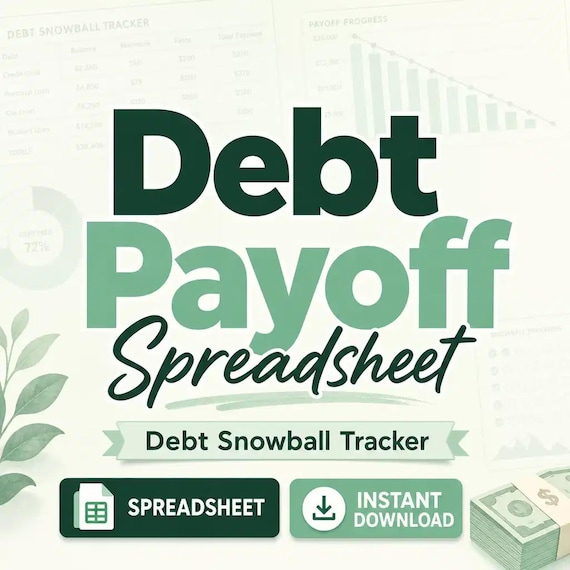
The featured product currently describes a debt payoff spreadsheet workbook, snowball and avalanche planning support, printable debt tracker pages, payment-tracking and progress-planning sections, and quick-start instructions. Its title identifies Excel and Google Sheets use, and the listing describes a digital download rather than a physical item. Confirm the current preview, included files, software requirements, and instructions on the product page before purchase because that listing is the final source for what is included.
This type of download fits someone who already knows the accounts to include and wants a ready-made place to compare an order, record payments, and review progress. It may not fit someone who cannot open the stated file type, wants automatic connection to bank accounts, needs personalized financial advice, or is dealing with debt that requires negotiation or legal guidance. Decide whether you need the focused payoff tracker, a paycheck-budget companion, or a broader money-management bundle before buying overlapping files.
- Confirm the current file types and inside-page previews.
- Check whether the focused tracker or a broader budget bundle better matches your routine.
- Plan one monthly reconciliation before depending on a payoff projection.
- Treat the download as an organizer, not a substitute for account statements or qualified advice.
Printables used in this guide
Instant downloads from the SteadyStackStudio Etsy shop.
Debt Payoff Spreadsheet
Debt payoff spreadsheet with snowball and avalanche planning: Excel-first workbook with debts list, auto priority ranks, payment…
Paycheck Budget Spreadsheet
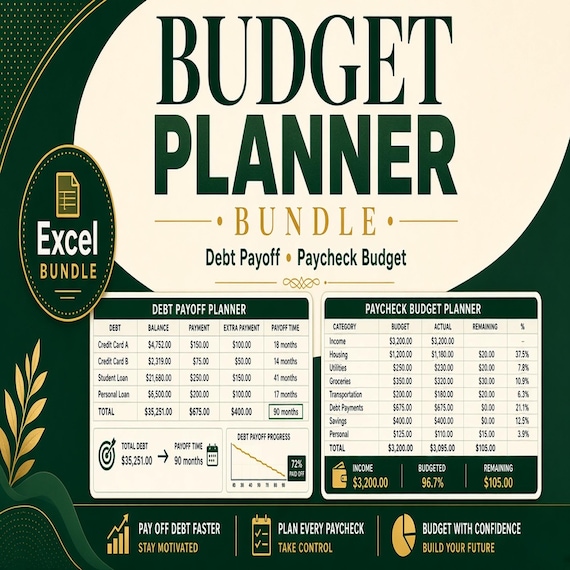
Get the core money reset tools in one download: paycheck budgeting, debt payoff tracking and side hustle income/expense…
Paycheck Budget Spreadsheet
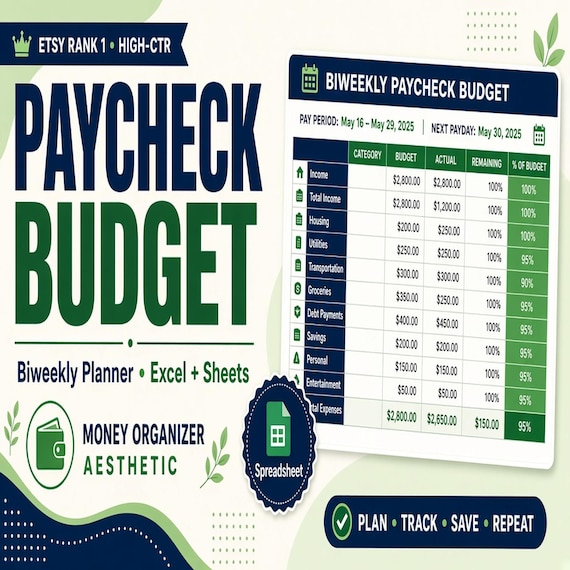
Plan every paycheck before it disappears with a paycheck budget spreadsheet, bill tracker and printable budget planning pages.
Budget Planner Spreadsheet Bundle
The complete money management bundle combines budgeting, bills, debt payoff, savings, grocery planning and spending reset tools…